
Preventive visits that are scheduled, done and proven
When an AMC contract is approved, its visits are scheduled for you, spread evenly across the term. Managers assign technicians; technicians record what they did; overdue visits raise an alert.
Maintenance and AMC · Product tour
Maintenance management, step by step in the real app
Screenshots from the working product, using a fictional demo company. Select any screen to open it full size.
- Step 1
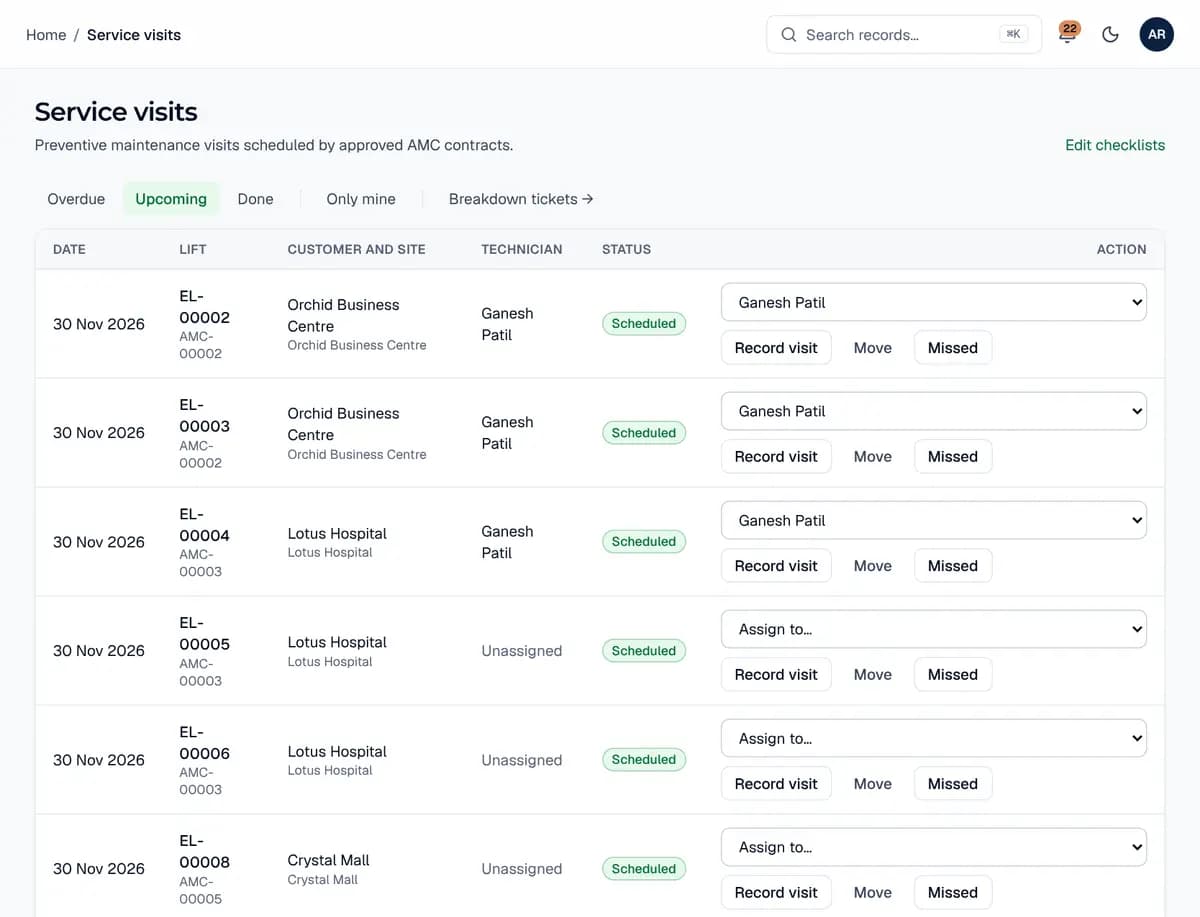
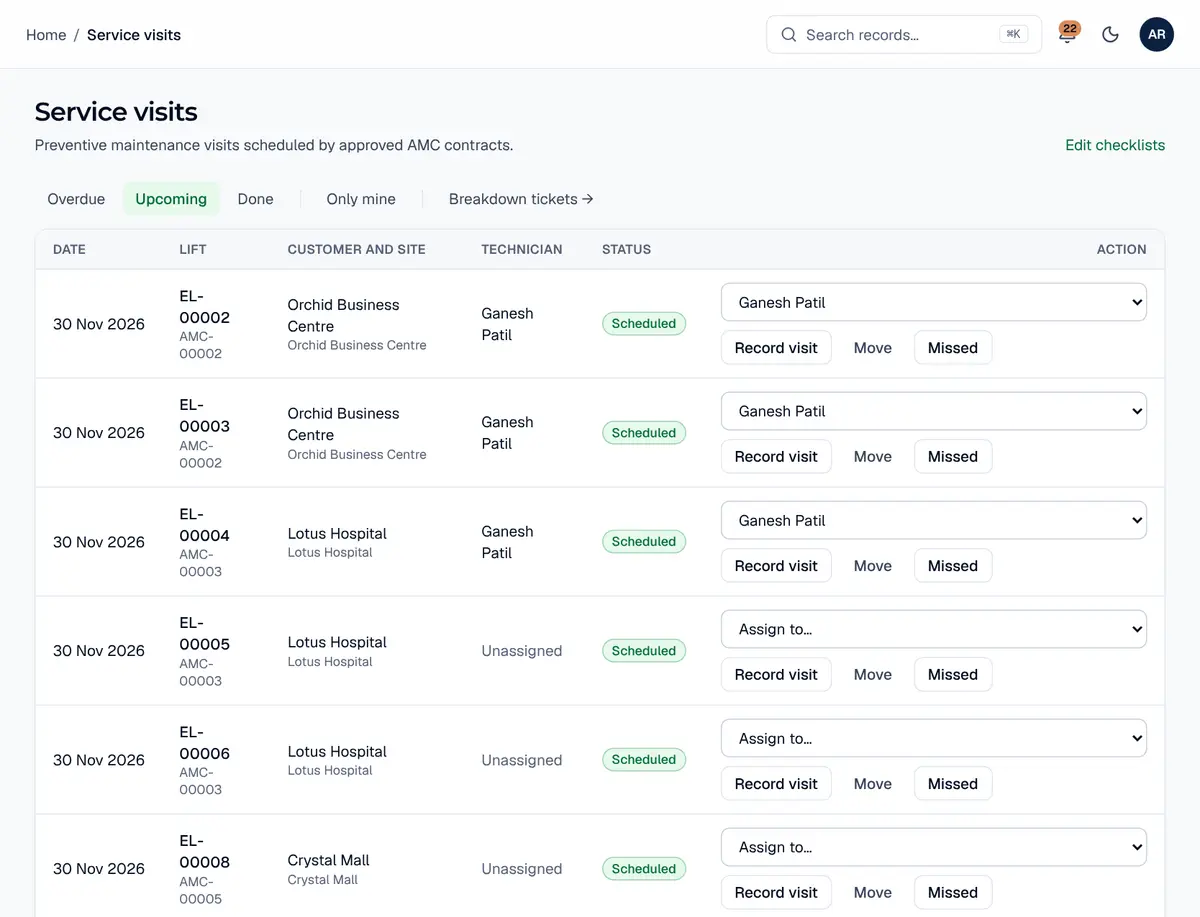
The visit schedule
Visits generated from approved AMC contracts, with technician, status and overdue, upcoming and done views.
- Step 2
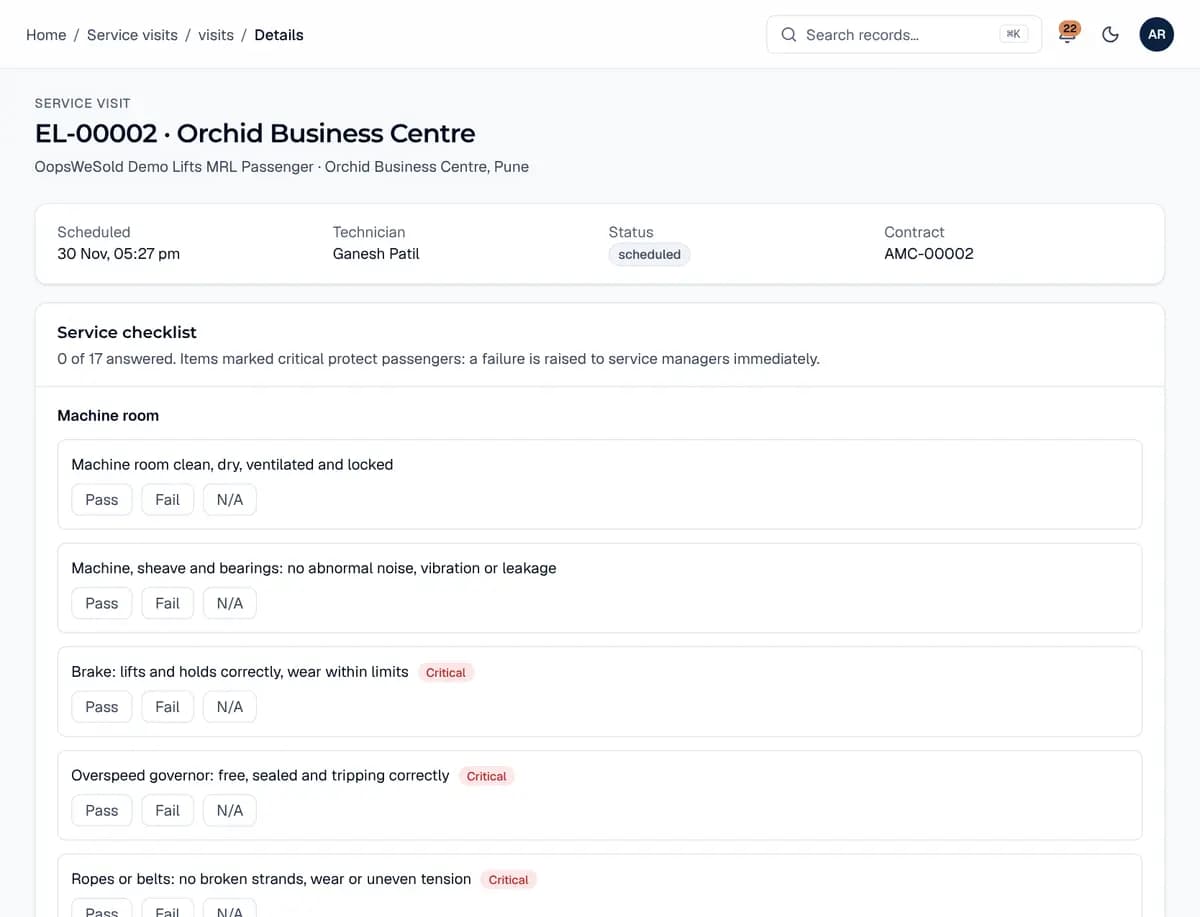
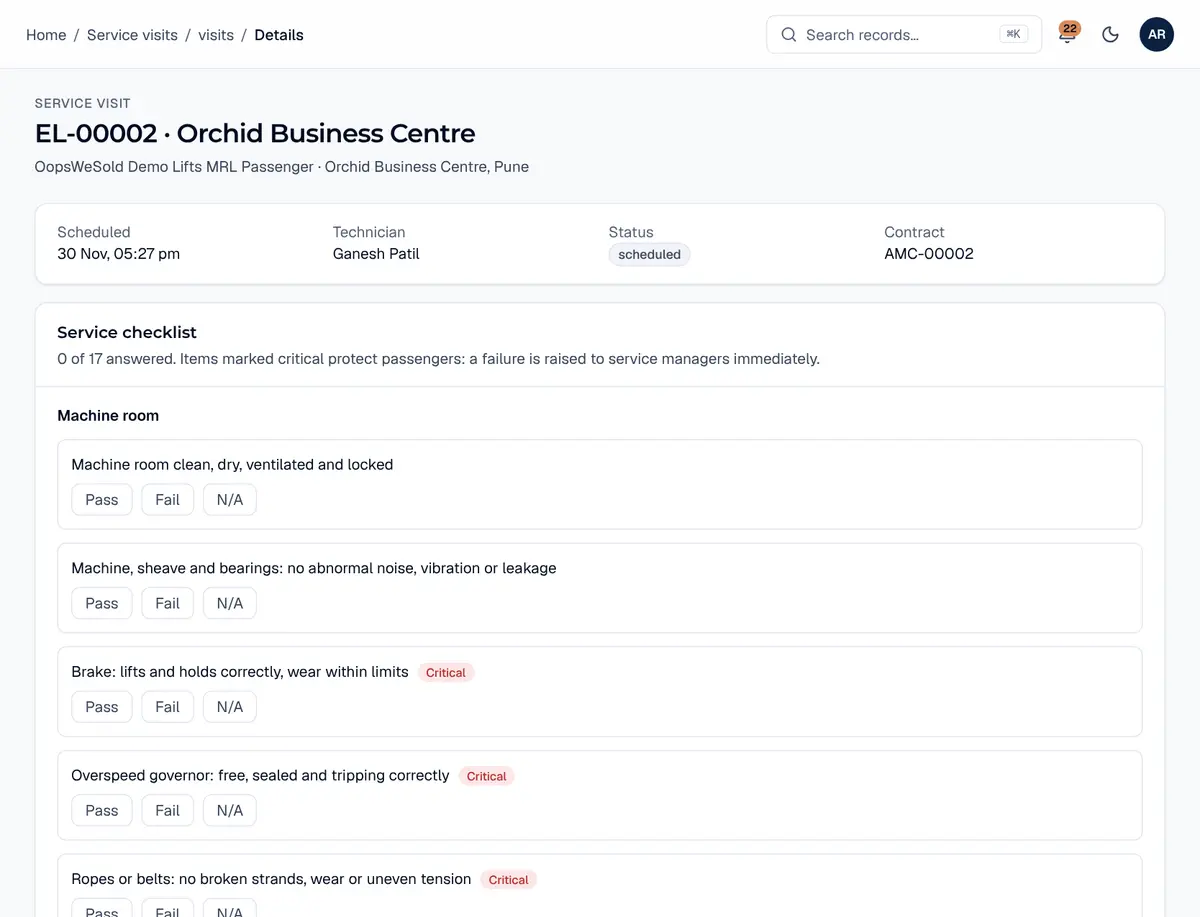
Checklist per lift type
Each item answered pass, fail or N/A. Failures need a reason, and safety-critical failures alert managers.
- Step 4
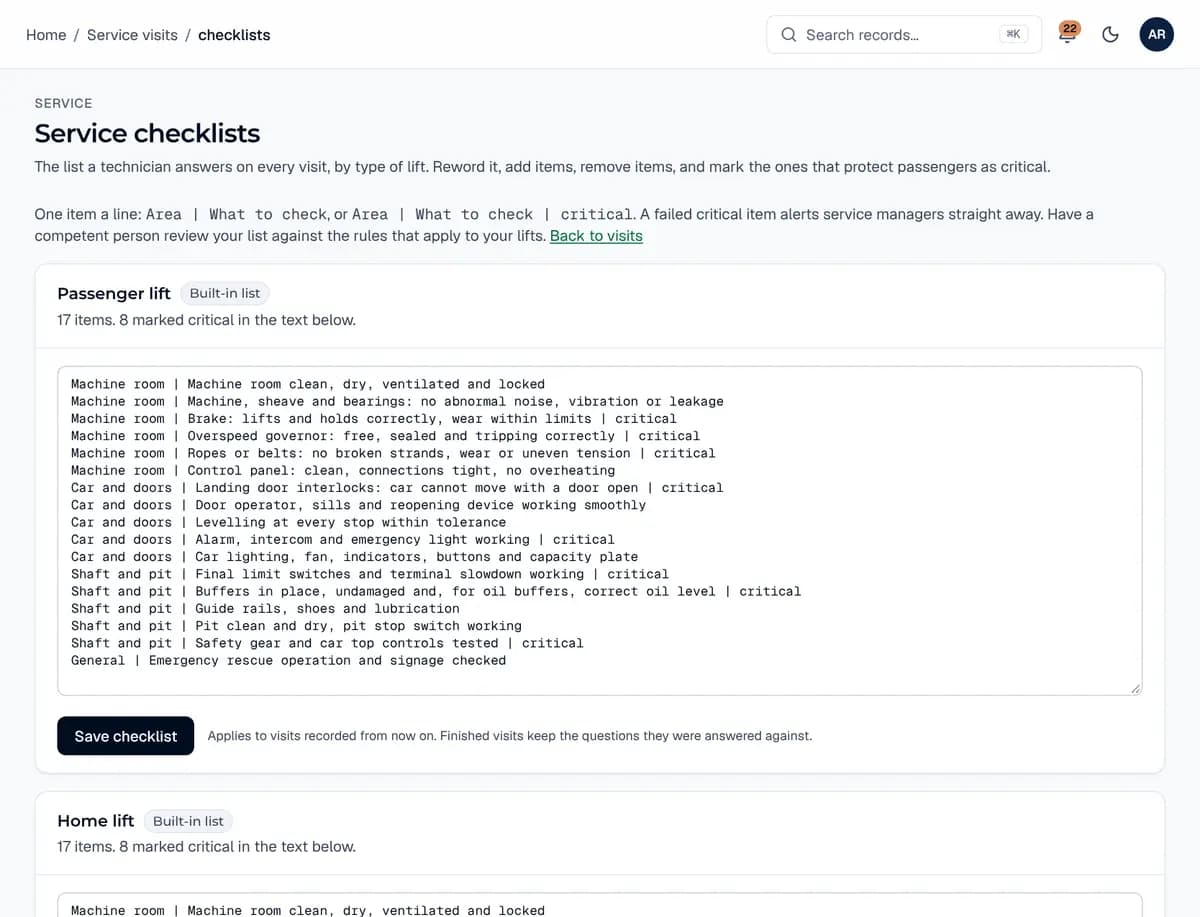
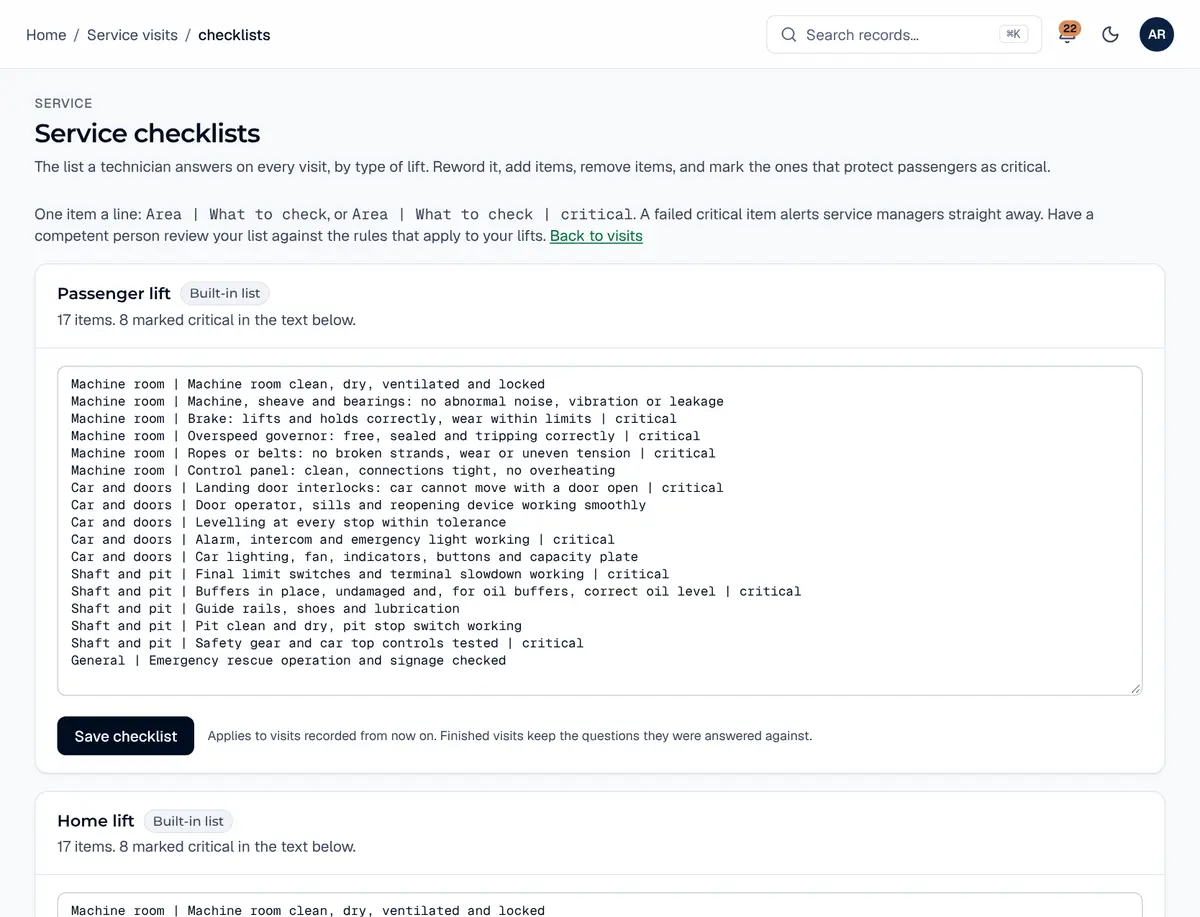
Checklists you control
Built-in lists for lifts, escalators and moving walks, edited by your company and versioned.
How it helps
Visits schedule themselves
Approving a contract creates its visits across the term.
Proof of the visit
Every answered item, photo and signed document stays with the visit.
Unsafe findings reach a manager
A failed safety-critical item is raised to service managers at once.
Compared with how it is usually done
Spreadsheets, Tally and general ERPs are good tools for what they were built for. This is where each one fits for this part of a lift business.
| Task | Excel, paper and WhatsApp | Tally or a general ERP | OopsWeSold |
|---|---|---|---|
| Plan the month's visits | Rebuild the sheet every month | Not designed for maintenance visits | Generated from each contract |
| Record what was checked | Paper card signed on site | Not available | Item-by-item checklist with reasons and photos |
| Spot missed visits | Found when the customer complains | Not available | Overdue visits flagged and alerted |
Other elevator software
We have not compared this area across other elevator software yet.
Checked on 24 November 2026, from each vendor's own website. See the full comparison.
Who it is for
- Service managers
- Technicians who need their own list and nothing else
The problem
Visit schedules live in spreadsheets, missed visits are discovered by an angry customer, and contract obligations are hard to prove.
How it works
- 1
Scheduled from the contract
Approving an AMC contract creates its visits across the term.
- 2
Assign and move
Managers assign a technician and move dates as needed.
- 3
Record
The assigned technician or a manager records the work. A missed visit is marked, with a reason.
- 4
Alert
Visits past their date raise an alert for the service manager.
One lift, every service record
Pick a stage of the maintenance contract to see what is recorded, then run a sample breakdown from complaint to customer update.
Lift L-2041
Passenger · 8 stops
Under AMC
- Visit
- Preventive, next Tuesday
- Scheduled from
- The contract's visit plan
- Lift
- L-2041
Sample breakdown BD-00211
1Complaint received
2Assignment
3Technician review
4Work completed
5Customer update
Fictional lift and records. OopsWeSold records service work; it does not monitor equipment, and a completed ticket depends on proper field records and authorisation.
What you can do today
- Visits generated from the contract
- Assignment and rescheduling
- Visit records and missed-visit marking
- Overdue-visit alerts
- Technician view limited to assigned visits
- A checklist per lift type (lifts, escalators and moving walks) answered item by item, with a reason required for every failure
- Safety-critical failures raised to service managers at once
- Photos and signed documents attached to the visit
- Checklists your company edits, versioned, with every completed visit keeping the list it was answered against
Controls and records
- A technician sees and records only their assigned work
- Changes are audited
Not available yet
So there are no surprises:
- Mobile technician app with offline use
- GPS check-in and an on-screen customer signature
Connected to
Questions
Is there a technician mobile app?
Not yet. Technicians use the web screens limited to their assigned visits. A dedicated mobile app is planned.